Source Waterproof Halogen Auto Tail Lamp for Trucks, Cars, Buses
Find 30 Waterproof Halogen Auto Tail Lamp options from verified Chinese manufacturers. Compare specifications like voltage, certifications, and packaging details for rear position and parking light applications across various vehicle makes.
Key considerations
Products List


Premium Full LED Sequential Brake Modified Waterproof Auto Rear Car Taillight
$124.18 - $153.06
MOQ: 4 Pieces


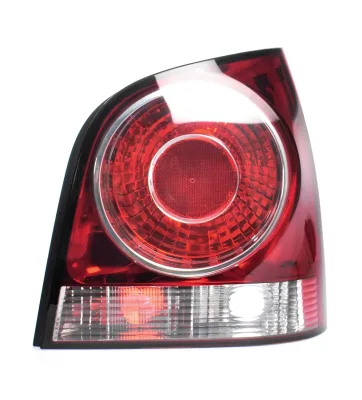


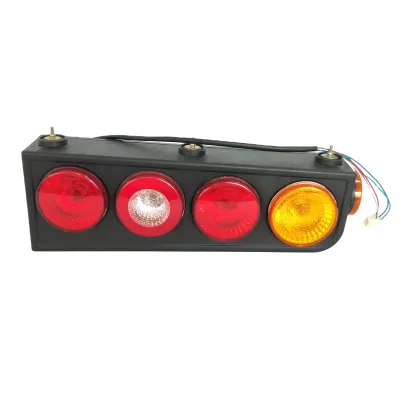
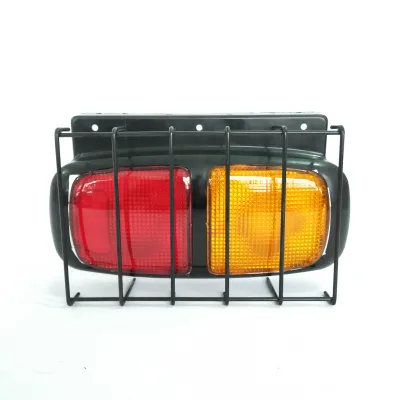


Comprehensive Sourcing Guide
Strategic Sourcing Guide for Waterproof Halogen Auto Tail Lamps
Understanding Technical Specifications and Material Composition
When sourcing waterproof halogen auto tail lamps, the primary objective is to identify components that balance optical performance with environmental resilience. The core keyword implies a specific intersection of technology: a halogen light source housed within a waterproof assembly. Based on available product data, the material composition for these units is explicitly identified as halogen, which dictates the light emission characteristics and thermal management requirements. Unlike LED alternatives, halogen lamps rely on a tungsten filament heated by an electric current, a process that generates significant heat. Consequently, the housing and lens materials must be engineered to withstand high temperatures while maintaining structural integrity against water ingress.
The electrical interface is a critical specification to verify. Observed data indicates a voltage rating of 12V for standard applications, which aligns with most passenger vehicle electrical systems. However, for heavy-duty applications such as trucks, the operating voltage may shift to 24V. Buyers must confirm the specific voltage requirement of their target vehicle platform before placing orders, as a mismatch can lead to immediate failure or reduced lifespan. The base type is another vital technical parameter. The supply data lists P21W and W21W bases as common configurations. The P21W base is typically associated with standard automotive applications, while the W21W base is often found in specific rear position or brake light configurations. Selecting the correct base is essential for physical compatibility with the vehicle's socket.
Functionality also varies by application. The tail lamp serves multiple roles, including acting as a back position lamp, a parking light, and often integrating brake light functions. Some advanced units may combine these functions with front position lamps or dipped headlights, though the core "tail lamp" designation usually focuses on rear visibility. The physical placement is consistently noted as "Rear" in the product attributes, confirming their intended use for the back of the vehicle. Buyers should ensure the product description explicitly states "Back Position Lamp" or "Taillight" to avoid confusion with front-facing lighting units.
Compliance and Certification Verification
In the automotive aftermarket and OEM replacement sectors, compliance is not merely a formality but a prerequisite for market entry and safety. The supply data highlights several critical certifications that serve as indicators of quality and regulatory adherence. The most frequently observed certifications include CCC (China Compulsory Certification), E-mark, and DOT (Department of Transportation).
The CCC certification is a mandatory requirement for products sold within the Chinese market, ensuring that the manufacturing process and the final product meet national safety standards. The presence of the E-mark indicates compliance with United Nations Economic Commission for Europe (UNECE) regulations, which is essential for vehicles intended for sale or operation in European markets. The DOT certification signifies that the product meets the safety standards set by the US Department of Transportation, a critical requirement for the North American market.
When evaluating potential suppliers, buyers must verify that the specific model they intend to purchase carries the relevant certifications for their target region. For instance, a product listing that mentions "CCC, E-mark, DOT" suggests a higher level of versatility and compliance readiness. However, it is important to note that not every listed product may possess all certifications simultaneously. Buyers should request specific certification documentation for the exact model number, such as JL02-006 or LS-KL-242, to ensure that the batch being ordered is legally compliant.
Additionally, the data references ISO9001:2000 as an applicable standard for the production process. While this is a quality management system standard rather than a product safety certification, it indicates that the supplier has established procedures for consistent quality control. Buyers should verify if the supplier's current quality management system is up to date, as ISO standards are periodically revised. The presence of "c-ccc" or "ccc" in the product standards further reinforces the focus on Chinese regulatory compliance.
Cost Drivers and Pricing Dynamics
The pricing landscape for waterproof halogen auto tail lamps is influenced by a complex interplay of factors, including material costs, certification overheads, and order volume. The observed price range in the market spans from $0.17 to $634 USD. This wide disparity is not indicative of a single product category but rather reflects the diversity of the supply chain, ranging from simple bulb replacements to complete assembly units with advanced features.
The lower end of the price spectrum, around $0.17, likely corresponds to individual bulbs or very basic replacement components, such as the halogen bulbs themselves with P21W or W21W bases. In contrast, the upper end of the range, reaching $634, suggests complete tail lamp assemblies, potentially for specific high-end vehicle models like Kia or Toyota, or units that include complex optical systems and robust waterproofing.
Minimum Order Quantity (MOQ) is a significant cost driver. The observed MOQ range is between 4 and 1000 units. For small-scale buyers or those testing a new market, an MOQ of 4 units offers flexibility but may result in a higher unit cost due to the lack of economies of scale. Conversely, larger buyers who can commit to an MOQ of 1000 units will likely secure more favorable pricing. The packaging standard also impacts logistics costs. Products are often packed in cartons with specific quantities, such as 10, 16, or 20 pieces per carton, or in larger palletized shipments with dimensions like 60x60x30 cm. Buyers must calculate the total landed cost, including shipping, which is heavily dependent on the volume and dimensions of the packaging.
Furthermore, the inclusion of premium brands, such as Osram for the bulb component, can significantly influence the price. A tail lamp assembly featuring an Osram bulb will command a higher price point compared to one with a generic bulb, reflecting the perceived quality and longevity of the light source.
Typical Applications and Vehicle Compatibility
Waterproof halogen auto tail lamps are designed for a broad spectrum of applications, ranging from passenger cars to heavy-duty trucks. The supply data explicitly mentions compatibility with major vehicle manufacturers, including Kia and Toyota. Specific OEM numbers, such as L 92403-D4000 and R 92404-D4000, are provided for Kia models, indicating that these lamps are direct replacements for factory-installed units. Similarly, the mention of Toyota suggests a wide availability for Japanese vehicle models.
The application scope extends beyond simple passenger vehicles. The data notes applications for "truck side light taillight warning brake light," highlighting the versatility of these units in commercial transport. In these heavy-duty contexts, the waterproofing and durability requirements are even more stringent. The protection level of IP68, observed in some product attributes, indicates a high degree of dust tightness and the ability to withstand prolonged immersion in water, making these units suitable for harsh environments.
The purpose of these lamps is primarily for replacement and repair. Buyers sourcing these components are often looking to restore vehicle safety and compliance after an accident or due to wear and tear. The condition is consistently listed as "New," ensuring that the buyer receives a fresh, functional unit. The warranty period, often cited as 1 year, provides a safety net for buyers, ensuring that any manufacturing defects are covered within a reasonable timeframe.
Supplier Evaluation and Quality Control
Selecting the right supplier is critical to ensuring the reliability of the waterproof halogen auto tail lamps. The supply data indicates that the place of origin is primarily China, with specific mentions of Shanghai. While this provides a geographical context, buyers must look beyond the location to evaluate the supplier's capabilities.
Quality control should be a central focus of the evaluation process. The data references "High Quality" as a product attribute, but this is a subjective claim. Buyers should verify the supplier's adherence to quality standards, such as ISO9001:2000, and request evidence of their quality management processes. The presence of specific certifications like CCC, E-mark, and DOT is a strong indicator of a supplier's commitment to compliance.
When evaluating suppliers, buyers should also consider the customization options available. The data confirms that customization is available, which is a valuable feature for buyers with specific requirements or those looking to private label products. However, customization often comes with higher MOQs and longer lead times, which must be factored into the procurement plan.
Packaging details are another area for scrutiny. The data lists various packaging standards, from simple cartons to palletized shipments. Buyers should ensure that the packaging is robust enough to protect the lamps during transit, especially given the fragile nature of glass and plastic components. The standard packing dimensions, such as 69x39x66cm/16PCS, provide a baseline for logistics planning.
Long-Term Procurement Considerations
Sourcing waterproof halogen auto tail lamps is not just a one-time transaction but a long-term relationship that requires careful planning. The warranty period of 1 year is a standard offering, but buyers should negotiate terms that extend beyond this baseline if possible. A robust warranty policy can mitigate the risks associated with potential defects and ensure customer satisfaction.
Lead times are another critical factor. While the data does not specify exact lead times, the MOQ and customization options suggest that production schedules can vary. Buyers should establish clear communication channels with suppliers to track production progress and ensure timely delivery. For large orders, it is advisable to request a production schedule and milestones to avoid delays.
Inventory management is also essential. Given the wide range of models and specifications, buyers should maintain a strategic inventory of high-demand items, such as those for Kia and Toyota, while keeping a lean stock of specialized or low-volume items. This approach helps balance cash flow with the need to fulfill customer orders promptly.
Finally, buyers should stay informed about regulatory changes and technological advancements. While halogen technology remains prevalent, the industry is gradually shifting towards LED solutions. Buyers should monitor these trends to ensure their product offerings remain competitive. However, for the specific niche of waterproof halogen auto tail lamps, the demand remains strong, particularly in the replacement market for older vehicle models and in heavy-duty applications where halogen lamps are still preferred for their cost-effectiveness and reliability.
Conclusion
Sourcing waterproof halogen auto tail lamps requires a meticulous approach that balances technical specifications, compliance requirements, and cost considerations. By understanding the nuances of halogen materials, verifying certifications like CCC and E-mark, and evaluating suppliers based on quality and customization capabilities, buyers can secure reliable components for their automotive needs. The wide price range and diverse applications highlight the importance of precise specification matching to ensure compatibility and performance. With proper planning and supplier evaluation, buyers can build a resilient supply chain that meets the demands of the global automotive market.
FAQs
What certifications do waterproof halogen auto tail lamps typically have?
These lamps commonly carry CCC, E-mark, and DOT certifications. The CCC mark is mandatory for the Chinese market, while E-mark and DOT ensure compliance for European and US markets respectively.
Which base types are available for these tail lamps?
The available base types include P21W and W21W configurations. Selecting the correct base is essential for physical compatibility with the vehicle socket and ensuring proper electrical connection.
Can these lamps be customized for specific vehicle models?
Yes, customization is available for these units. Buyers can request specific modifications, though this often requires higher minimum order quantities and may affect lead times for production.
What is the operating voltage for these auto tail lamps?
The standard operating voltage is 12V for most passenger vehicles. However, heavy-duty applications like trucks may require 24V units, so verifying the vehicle platform is critical before ordering.
How are these lamps packaged for shipping?
Packaging varies from cartons containing 10 to 20 pieces to palletized shipments. Specific dimensions like 60x60x30 cm or 69x39x66 cm are used depending on the product model and order volume.
Which vehicle brands are compatible with these tail lamps?
These lamps are compatible with major brands like Kia and Toyota. Specific OEM numbers are provided for direct replacement, ensuring fitment for models such as those requiring part numbers like L 92403-D4000.
What is the warranty period for these new tail lamps?
The standard warranty period is 1 year for these new units. This coverage protects buyers against manufacturing defects and ensures product reliability during the initial period of use.